


English
Welcome
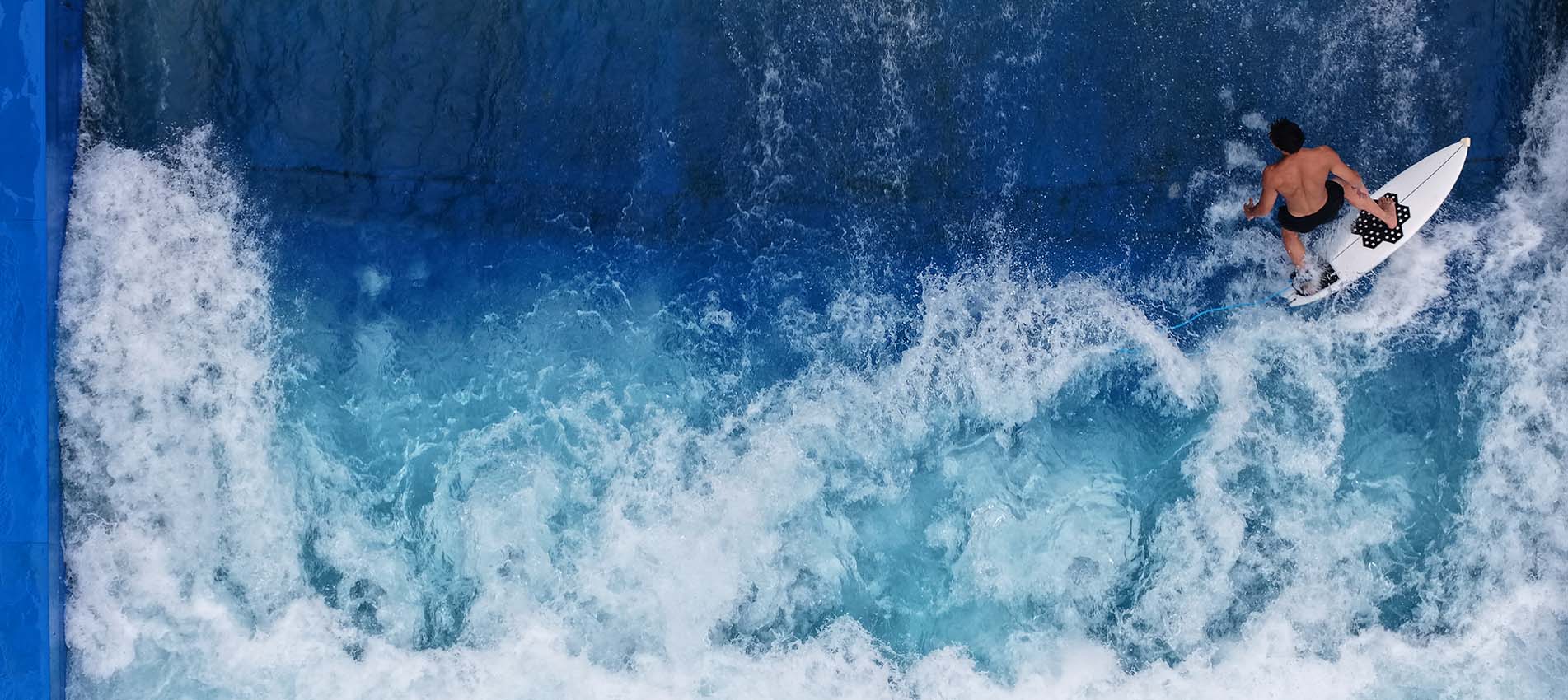
In recent years, artificial wave pools have become increasingly popular, they not only offer a variety of water-based activities but also provide a comfortable experience for exercise and recreation. The design of a tsunami pool is not simply the construction of the pool, but a systematic engineering system encompassing site planning, structural mechanics, hydraulic design, equipment supply, water treatment, safety protection, and operation.
1. Scientific Site Selection and Overall Layout Planning
The design of an artificial tsunami pool must first complete scientific site selection and overall layout planning.
In terms of geographical conditions, the site must have sufficient water supply, a stable power supply, and good drainage conditions. Simultaneously, the surrounding environment should be open, with fresh air and no pollution sources, which is conducive to long-term water quality maintenance and improving the visitor experience. Accessibility is also crucial. The wave pool area should be easily accessible and equipped with adequate parking and evacuation routes to meet the evacuation needs of large numbers of visitors during peak seasons.
In the area of spatial planning, the wave pool adopts a standard trapezoidal slope structure, with one end being a deep water area and the other end being a shallow area. Generally, wave pools should be at least 150 meters long, 40-60 meters wide, and 1.8-3.5 meters deep. The deep area is used for wave generation, and the gentle slope design ensures the natural propagation and attenuation of waves, creating a safe play area suitable for visitors of all ages. Simultaneously, the overall layout must be coordinated with supporting facilities such as the lazy river, water slides, rest platforms, and service areas.
2. Design and Construction
Design: The design should incorporate the site's characteristics to create a unique style and atmosphere, while fully considering visitor safety and comfort.
Construction: Select high-quality building materials to ensure project quality and longevity. Prioritize environmental protection during construction to minimize the impact on the environment.
3. Reasonable Equipment Selection and Functional Configuration
Currently, the mainstream wave-making equipment on the market is divided into vacuum tsunami wave-making systems and pneumatic wave-making systems. Vacuum wave-making systems are suitable for large, high-end water parks. They can produce uniquely shaped waves such as towering waves, rotating waves, diamond waves, and sudden waves and create continuous waves of 1.5 meters and giant waves up to 3 meters high. The area of a vacuum wave pool is generally between 5,000 and 20,000 square meters, accommodating several thousand people at a time. Pneumatic wave-making systems are economical, efficient, and stable in operation, suitable for medium-sized and conventional water parks, producing safe and gentle wave heights of less than 1.2 meters.
All wave generators are equipped with a PLC intelligent control system, allowing free adjustment of wave height, wave interval, and wave frequency, and featuring multiple preset operating modes, including family leisure mode, surfing entertainment mode, and stunt performance mode. The equipment is equipped with a remote emergency stop device and overload protection function to ensure safe shutdown in abnormal situations.
4. Water Treatment and Maintenance
Water quality is the lifeline of wave pool operation, and a professional circulating water treatment design is crucial for high-standard wave pools.
Modern wave pools employ an integrated closed-loop circulating filtration system, equipped with multi-media filter tanks, activated carbon adsorption, ozone disinfection, and ultraviolet sterilization devices. The circulating water flow rate is designed for a full circulation standard of once every 4-6 hours, effectively filtering suspended solids, bacteria, and impurities from the water.
For daily maintenance, a standardized testing system is established, regularly testing residual chlorine, pH value, and water turbidity. Scum on the pool bottom and surface is cleaned, and regular equipment debugging, pipe dredging, and system maintenance are performed to ensure the long-term stable operation of the wave generation and water circulation systems.
5. Safety Protection and Management
Prominent water depth warning signs should be placed in the shallow, medium, and deep water areas of the pool. A safety barrier at least 0.8 meters high is installed between the deep and shallow areas to prevent children from accidentally entering dangerous areas. The pool perimeter is paved with a non-slip surface with a coefficient of friction of ≥0.6, and non-slip handrails are installed every 1 meter. Emergency lighting, life rings, life jackets, and other rescue equipment are provided around the pool.
Regarding operational management, a comprehensive safety management system must be established. During operations, professional lifeguards are stationed at fixed posts, and both audible and visual warnings are issued prior to each wave-generation cycle to prompt visitors to adjust their positions. Furthermore, it is equally important to implement standardized staff training, visitor safety advisory protocols, and emergency response plans.
6. Supporting Design and Operational Upgrades
Rest platforms, shaded seating, drinking fountains, and shower facilities can be provided around the pool to meet the rest and hygiene needs of visitors. In terms of landscaping, customized themed elements can be considered, such as artificial mountains, marine landscapes, and nighttime light shows, fog effects, and sound systems, enabling dual-mode operation of daytime surfing entertainment and nighttime performance art landscapes.
What you may not know is that wave pools not only meet the needs of family leisure, youth surfing, and general water recreation, but can also host water-themed parties, cultural performances, and festivals, greatly enhancing the overall utilization rate and commercial value of the venue.
Leave A Message